A new refrigerator can fit the floor plan but still fail because of the refrigerator upper cabinet. In this Korean apartment, the existing cabinet was in good condition and matched the rest of the kitchen, but it hung too low for the customer’s taller appliance. Raising and resizing the cabinet preserved the design while creating safe ventilation space.
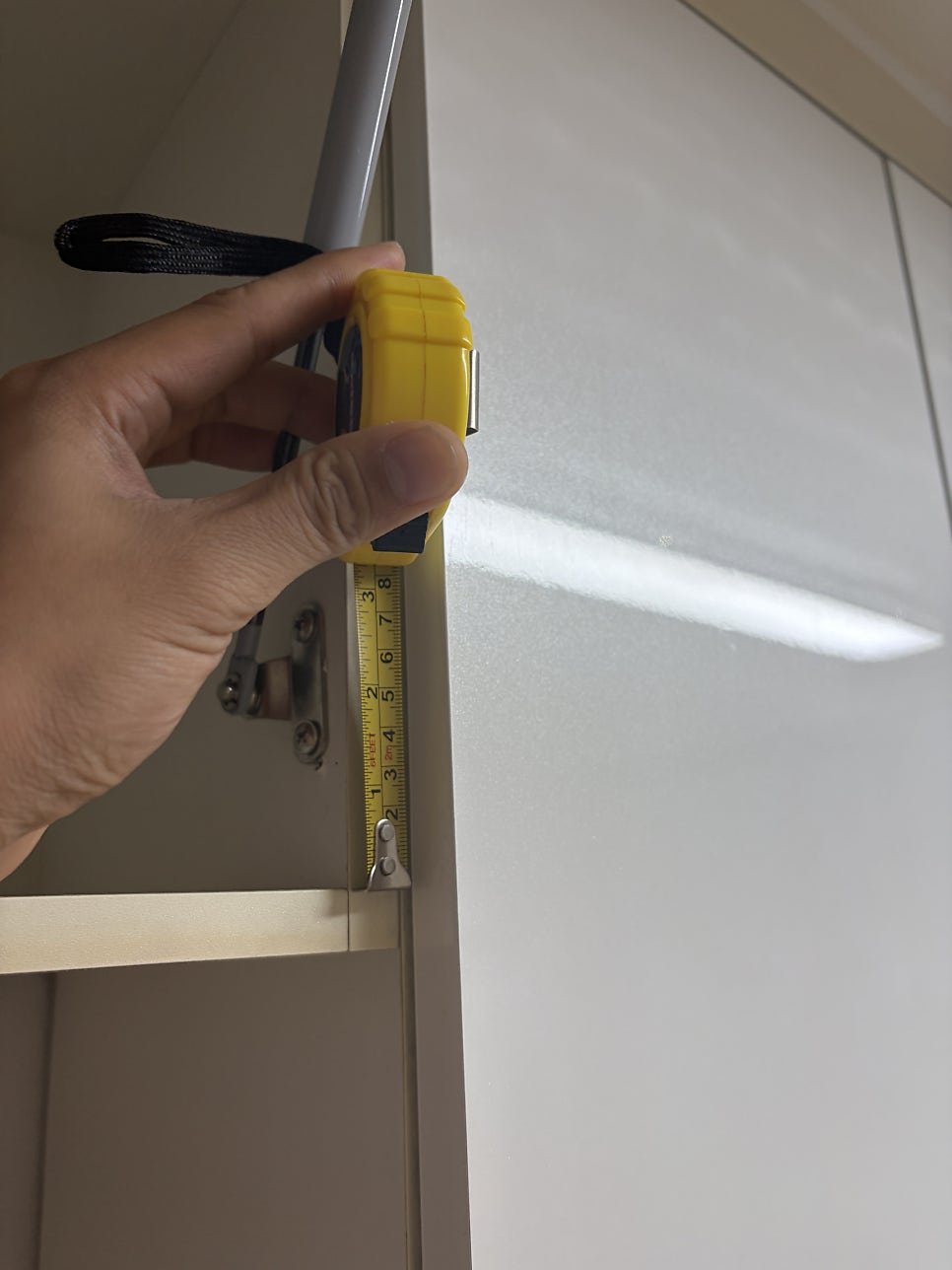
Measure the appliance and the air gap
The refrigerator in this case was 1,873 mm high. The manufacturer recommended about 20 mm of upper ventilation, so the opening needed to be at least 1,893 mm. Never measure only the cabinet front: check the lowest point, including trim, hinges and uneven flooring.
Also record the refrigerator width and depth, door swing, handle clearance, wall projection and the position of outlets or water lines. A refrigerator that slides into the opening may still be unusable if a door hits a wall or drawer.
Why keeping the existing cabinet made sense
Replacing one cabinet can create color and finish differences, especially in an older kitchen. The original unit was structurally sound, so the practical solution was to remove it carefully, reduce the lower portion where necessary, reinforce the fixing points and reinstall it higher.
This approach saved usable storage and avoided a larger kitchen renovation. It also limited damage to the wall covering and surrounding cabinets.
A careful modification process
- Confirm the final opening size. Add the manufacturer’s ventilation allowance to the appliance height.
- Remove doors and hardware. This reduces weight and protects hinges during cabinet removal.
- Detach the cabinet safely. Support it before loosening wall screws; upper cabinets can be heavier than they appear.
- Resize with clean, supported cuts. Any cut edge must be finished and the cabinet carcass kept square.
- Locate solid fixing points. Reinstall into suitable backing or anchors, not only the decorative wall finish.
- Rehang and align the doors. Adjust hinges so gaps are even and doors close cleanly.
- Verify clearance before delivery. Measure the finished opening again at several points.
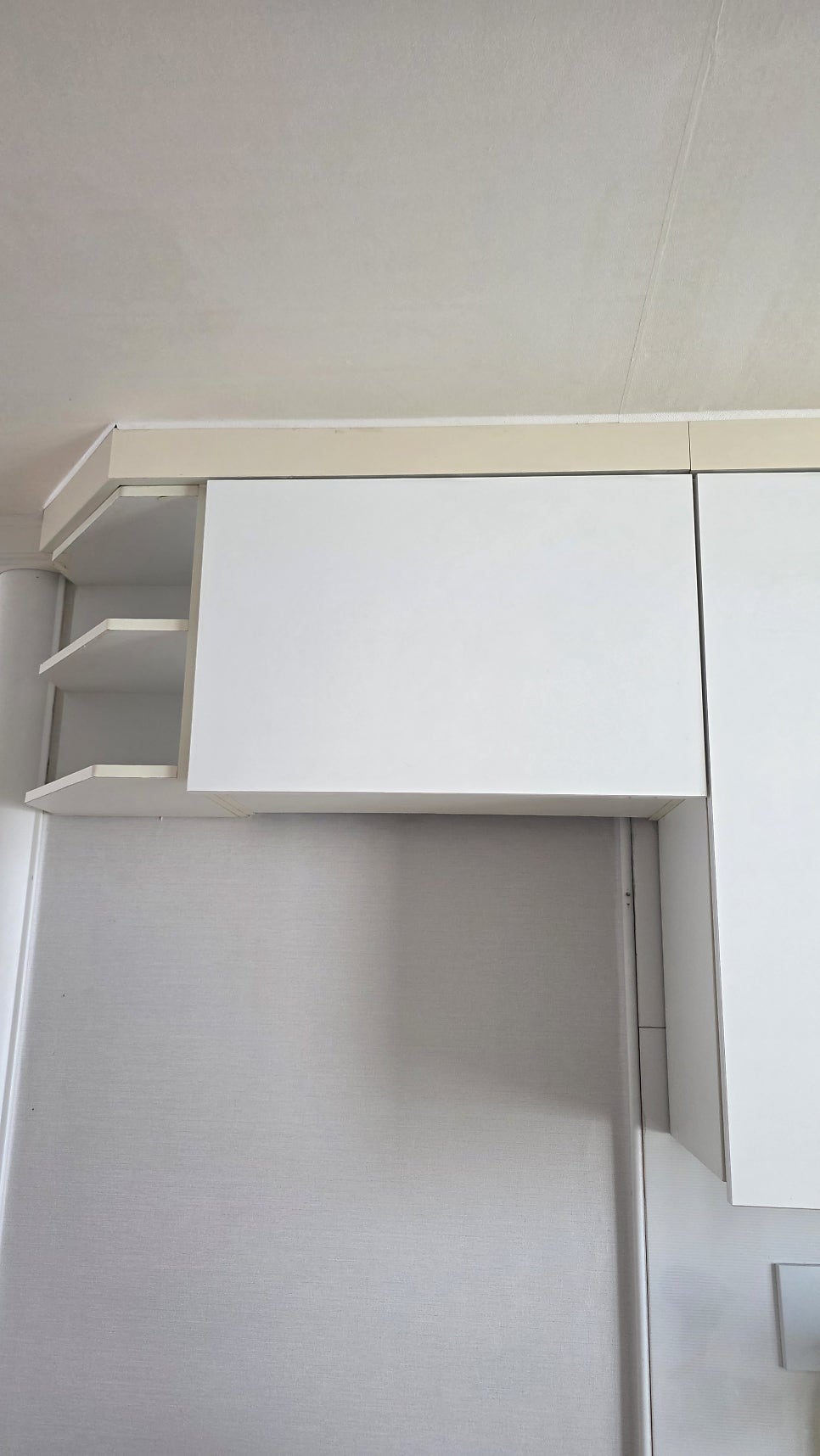
Do not ignore structural support
An upper cabinet must carry its own weight plus stored dishes or appliances. Moving it upward may place the fixings into a different wall material or miss the original backing. Confirm the wall construction and use fasteners rated for the load. If the cabinet is joined to neighboring units, restore those connections after leveling.
Final checks before using the refrigerator
- Confirm the appliance is level and does not rock.
- Maintain side, rear and top ventilation required by the manufacturer.
- Check that both doors and all drawers open fully.
- Keep the power cord free from pinching and heat.
- Make sure the cabinet doors do not strike the refrigerator.
If you rent the home, obtain the landlord’s written consent before cutting or relocating cabinetry. Apartment management may also have rules for drilling, work hours and waste disposal.
Good planning turns a size mismatch into a focused carpentry job rather than a full kitchen replacement. Measure the exact model, preserve sound materials and never sacrifice safe cabinet support for a few extra millimeters.
Adapted from the owner’s original Naver Blog case study: raising a refrigerator upper cabinet in a Korean apartment.