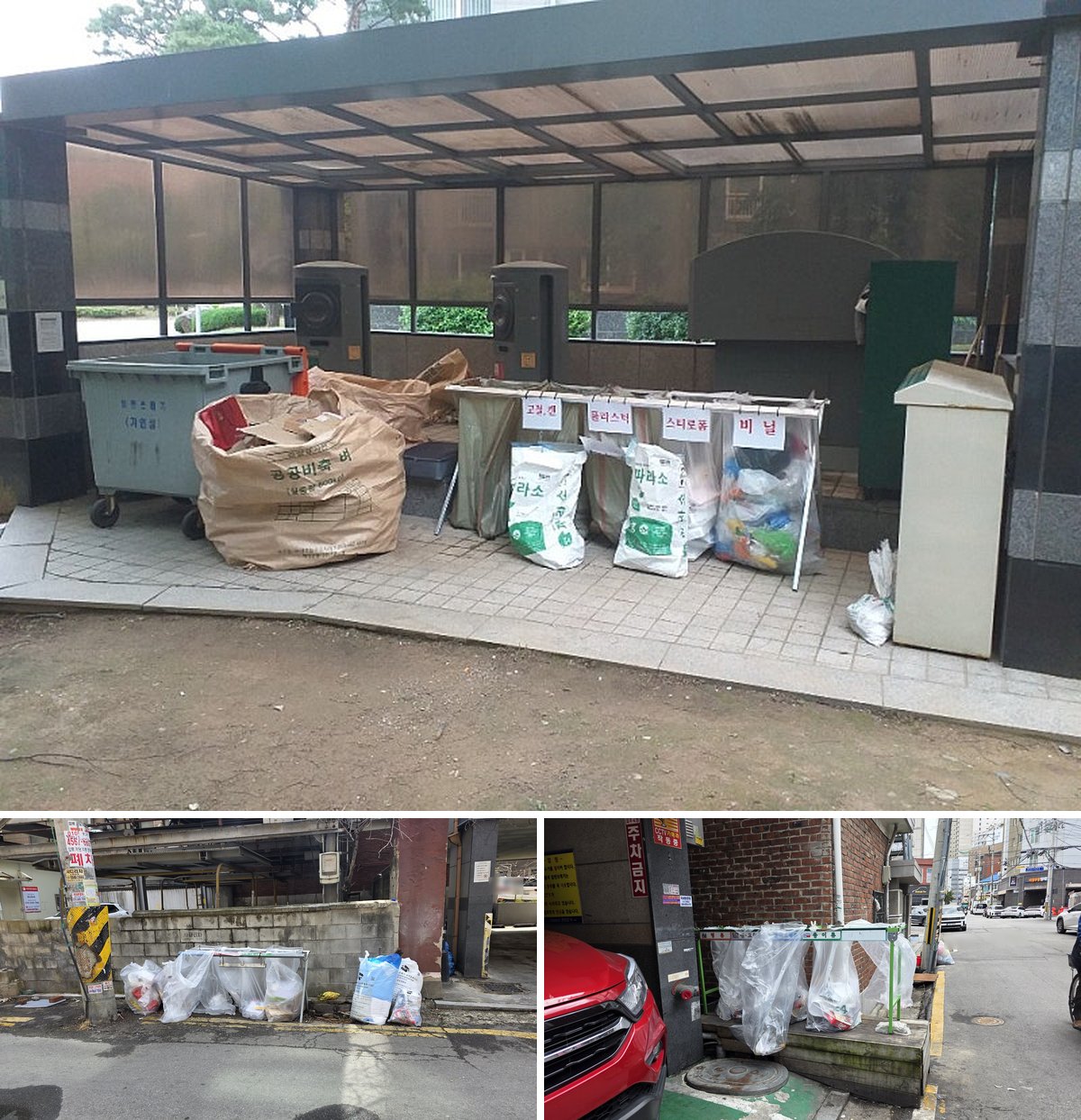
If you’re learning how to separate trash in Korea, sooner or later you’ll stand in front of your apartment’s recycling area holding a bag of garbage, with no idea which bin anything goes into. Everyone goes through this. Korea takes waste separation seriously — much more seriously than most countries — and getting it wrong can mean a fine, uncollected trash sitting outside your door, or an awkward note from the building manager.
The system looks intimidating at first, but it runs on a handful of rules. Once you know them, sorting your trash takes about two extra minutes a week. Here’s how it actually works.
Table of Contents
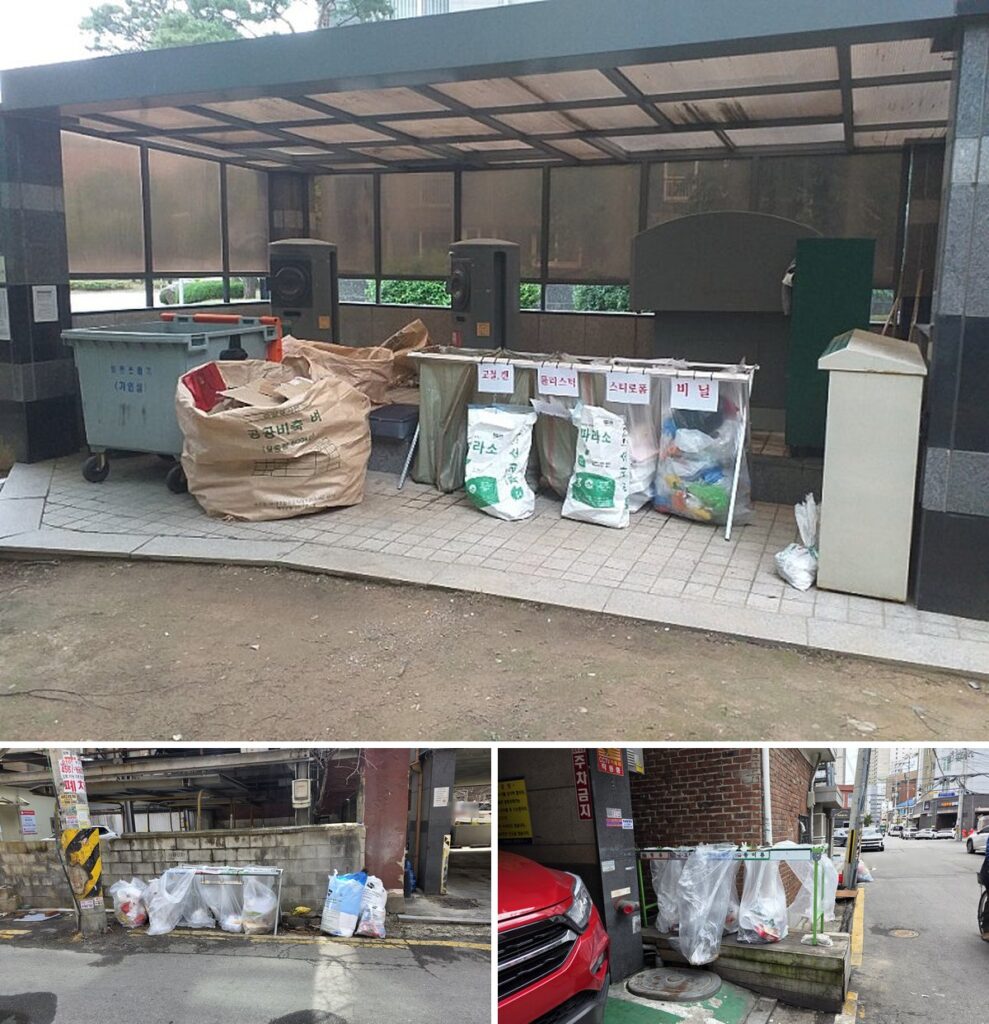
How to separate trash in Korea: the basic categories
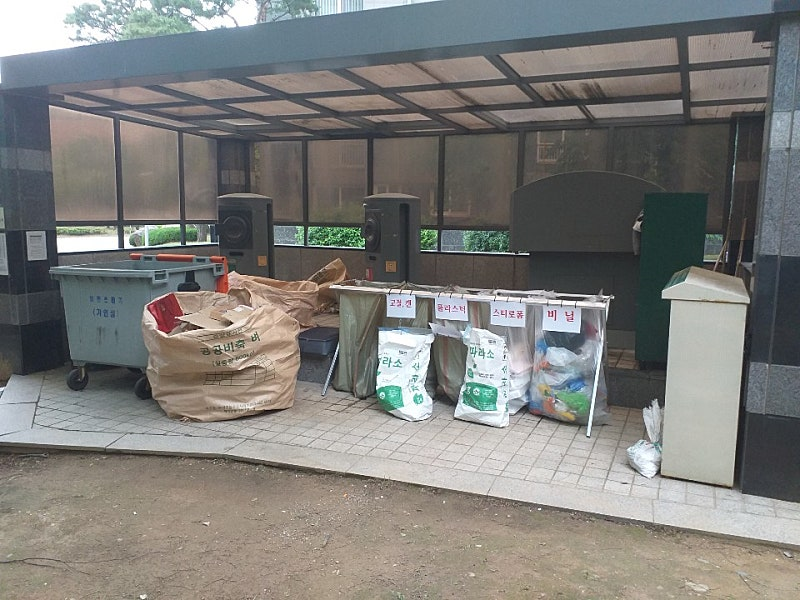
Most apartment complexes have a shared recycling area, usually open on specific evenings or all week depending on the building. You’ll typically see separate bins or nets for:
- Paper and cardboard
- Cans and scrap metal
- Glass bottles
- Plastic
- Vinyl (plastic bags, wrappers, bubble wrap)
- Styrofoam
One rule that surprises people: recyclables should be empty and rinsed. A yogurt cup with yogurt still in it isn’t recycling — it’s general waste. For plastic bottles, remove the label and cap ring if you can; many buildings now have a separate bin just for clear PET bottles.
You need official trash bags — two kinds
This is the mistake almost every newcomer makes once. You can’t use random garbage bags. Regular household waste must go in official, government-issued bags called jongnyangje bags (종량제 봉투), and they’re specific to your city or district. A Suwon bag won’t work in Yongin.
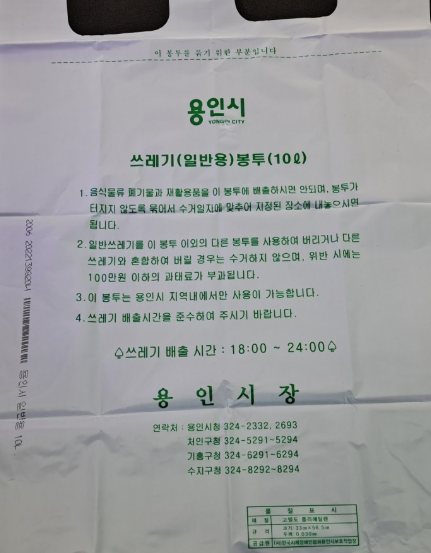
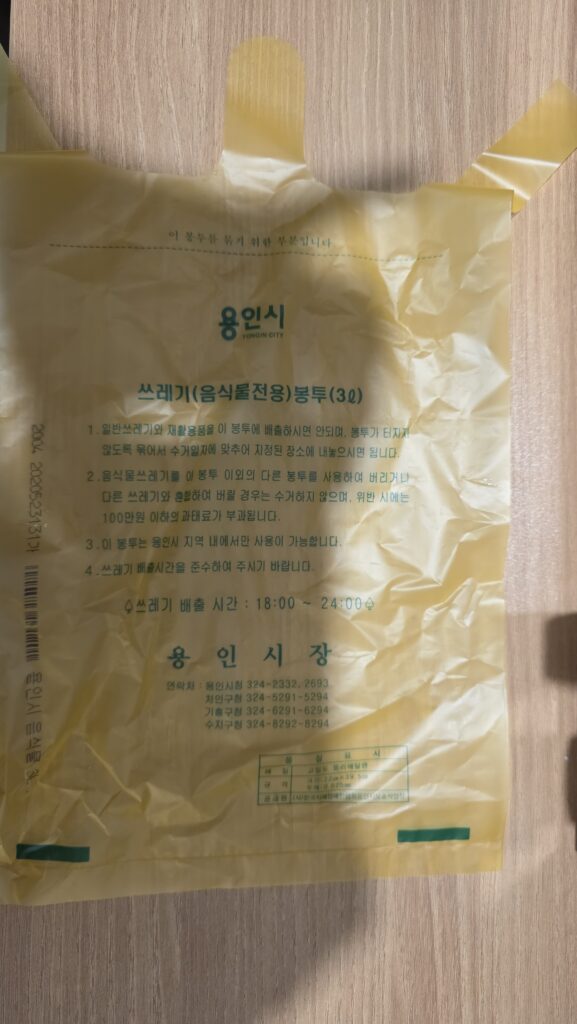
General waste bags
For anything that can’t be recycled and isn’t food waste:
- Used tissues and dirty paper
- Food-contaminated plastic and styrofoam
- Broken household items
- Animal bones (chicken, pork, beef)
- Hard shells — crab, clam, walnut
- Thick fruit skins like pineapple or coconut
- Egg shells and tea bags
Yes — bones, shells, and egg shells go in general waste, not food waste. This trips up almost everyone, including plenty of Koreans.
Food waste
The rough test: if an animal could eat it and it breaks down easily, it’s food waste. Vegetable scraps, leftover rice, fruit flesh, fish (minus large bones) — all food waste.
How you dispose of it depends on where you live:
- Many apartment complexes use RFID food waste machines. You tap a card (usually issued by the management office), the machine weighs your food waste, and you’re billed by weight at the end of the month. If you see a metal machine with a card reader near the recycling area, that’s it — ask your management office for the card.
- Villas and older buildings usually use small yellow food waste bags or a shared food waste bin with a sticker or chip system.
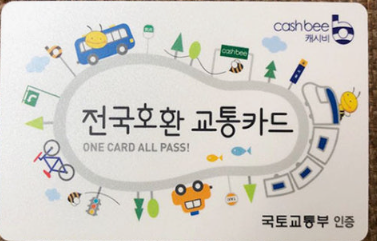
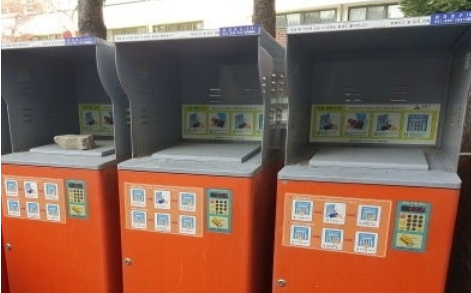
Either way, drain the liquid first. Your neighbors will thank you.
Where to buy the bags
Any convenience store, supermarket, or corner shop sells jongnyangje bags — but you usually have to ask at the counter, since they’re kept behind the register. Just say “jongnyangje bongtu juseyo” and the size you want.
Common sizes are 10L, 20L, 50L, and 75L. If you live alone or as a couple, get the 10L or 20L. The big bags look like better value, but a half-full 50L bag sitting in your kitchen for a week in July is a mistake you only make once. Prices vary by city because each local government sets its own rates, so don’t be confused if a friend in another district pays something different.
What happens if you don’t follow the rules
Leaving garbage out in a regular shopping bag is illegal, and it’s enforced more often than you’d expect. Recycling areas and building entrances are usually covered by CCTV, and district offices do open bags to look for anything identifying — a delivery label with your name and unit number is all it takes. Fines typically start around 100,000 won and go up for repeat offenses.
Enforcement varies by area. Seoul districts tend to be strictest; in some neighborhoods, improperly sorted bags simply won’t be collected, and they’ll sit there with a warning sticker until someone (you) re-sorts them.
Big items: furniture and appliances
Just moved in and want to throw out the previous tenant’s broken chair? You can’t put furniture, mattresses, or appliances out with regular trash. Large items need a bulky waste sticker (대형폐기물 스티커), which you buy from your district office — most districts also let you apply online or through an app and print a receipt. Fees run from a few thousand won for a chair to 15,000+ won for a wardrobe or sofa. Stick it on the item, put it in the designated spot, and it gets collected.
For working appliances, some districts offer free pickup of old electronics — worth checking before you pay for a sticker.
The items everyone gets wrong
- Greasy pizza boxes — the clean parts go in paper recycling; tear off the greasy, cheese-stuck sections and put those in general waste.
- Paper coffee cups — technically recyclable in theory, but most districts want them in general waste unless there’s a dedicated cup bin, because of the plastic lining.
- Batteries and light bulbs — never in the trash. Look for the small collection boxes near your apartment recycling area or at the local community center (주민센터).
- Broken glass and ceramics — not glass recycling. Wrap them safely and put them in a general waste bag.
When in doubt, ask your building’s management office. They deal with this every day and would much rather answer a question than re-sort a bag.
It gets easy fast
The first month, you’ll second-guess everything. By month two, you’ll be rinsing containers and peeling labels without thinking about it. It’s one of those small systems that makes Korea run the way it does — and once you’re on the right side of it, you’ll never get a knock on the door about your trash.
Service areas: Yongin, Suwon, Dongtan, and nearby Gyeonggi-do
Contact
- KakaoTalk: [kylechoung]
- Phone: [ 010-8775-5384]