An apartment sewage backflow is especially frightening on the first floor. Wastewater can rise through the bathroom drain even when the household has not used any fixture. In this 10-story Korean apartment, the blockage was in a shared line, so material discharged from upper floors returned through the lowest available opening.

Why the first floor is vulnerable
Gravity carries wastewater down a vertical stack toward the building sewer or septic tank. If a common horizontal pipe becomes blocked, incoming water has nowhere to go. Pressure builds and the wastewater seeks the lowest drain, which is often a first-floor bathroom or utility-room floor drain.
Wet wipes, thick tissues, hygiene products, grease and construction debris are common causes. Even items labeled flushable may remain intact long enough to catch on a rough joint and collect more debris.
Immediate steps for residents
- Stop water use throughout the affected stack. Ask building management to alert upstairs residents immediately.
- Keep people and pets away. Sewage contains harmful microorganisms; wear gloves and waterproof footwear if entry is unavoidable.
- Protect clean areas. Close the bathroom door and use disposable barriers, but do not seal a pressurized drain with an unsafe improvised plug.
- Document the damage. Take photos before cleanup for management, insurance and repair records.
- Call building management and a drainage specialist. A shared-line problem usually cannot be solved from one apartment alone.
When indoor drain cleaning is not enough
In the original case, attempts from inside the apartment did not clear the blockage. The team then emptied the septic tank, accessed the external manhole and used high-pressure equipment in the reverse direction. This approach reached the common line without repeatedly disturbing the resident’s bathroom.
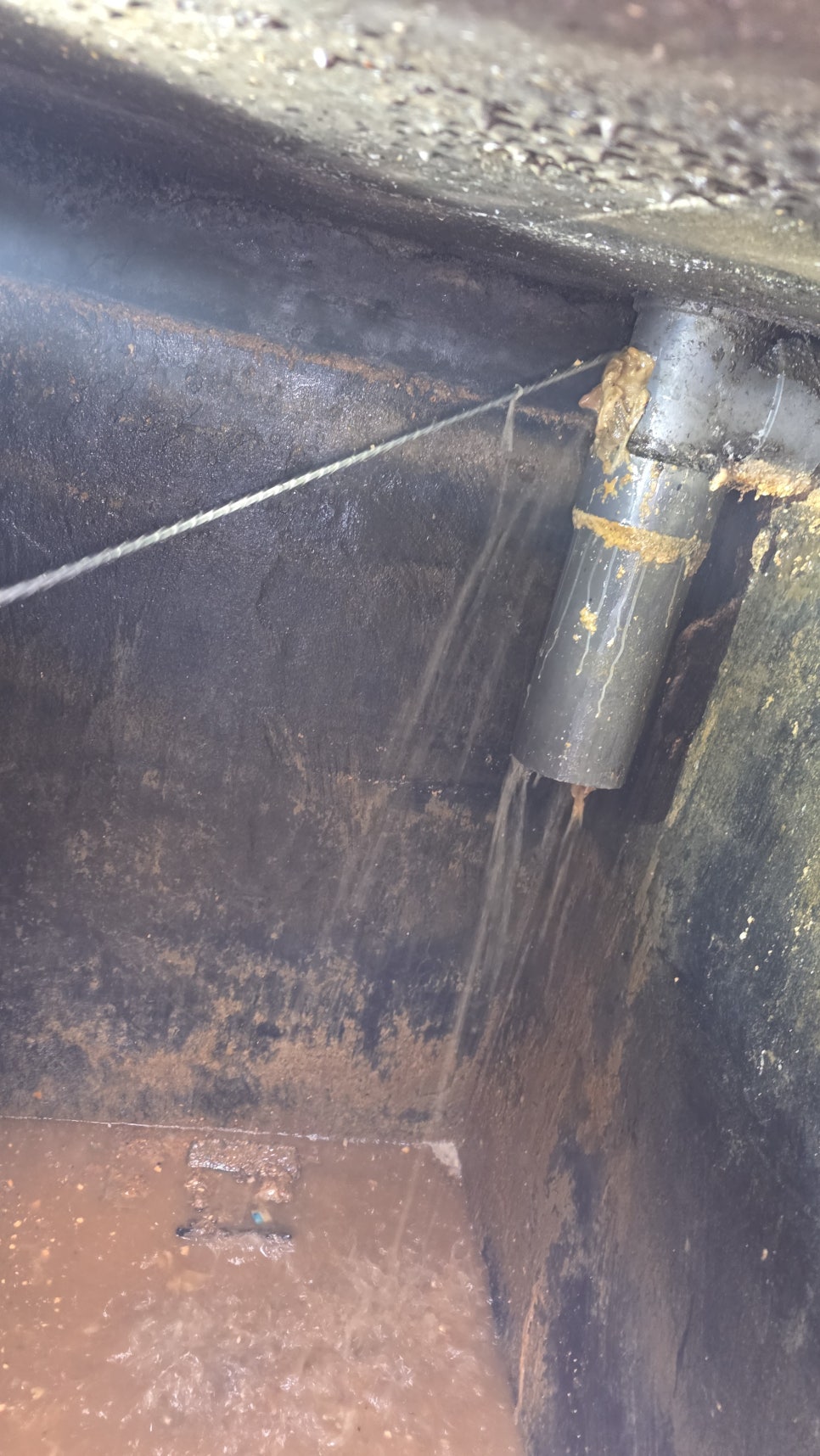
The right access point depends on the building layout. A specialist may use a cable machine, inspection camera, water jet or a combination. Clearing should be followed by a flow test from several floors and, when practical, a camera inspection to check for a broken pipe, displaced joint or recurring obstruction.
Serious safety warning
Do not enter a septic tank or confined manhole. Hydrogen sulfide, methane and oxygen deficiency can cause unconsciousness or death with little warning. Confined-space work requires trained personnel, gas monitoring, ventilation and rescue procedures. Residents should remain at a safe distance.
Cleanup after the flow is restored
Remove contaminated porous materials that cannot be safely disinfected. Clean hard surfaces with detergent first, then use an appropriate disinfectant according to its label. Ventilate the room, avoid mixing chemicals and wash hands thoroughly. If sewage reached electrical outlets, heating controls or wall cavities, arrange specialist inspection.
Preventing another backflow
- Never flush wipes, diapers, sanitary products or paper towels.
- Report slow common drains before they become a complete blockage.
- Keep manholes accessible for maintenance.
- Ask management whether the building has a regular inspection and cleaning schedule.
- After repeated events, investigate pipe condition rather than relying only on emergency clearing.
The most important clue is whether wastewater returns when other households use water. That pattern points toward a common line and requires coordinated building action.
Adapted from the owner’s original Naver Blog case study: first-floor apartment sewage backflow and common-line clearing.