A hole in an apartment wall can look alarming, especially when the damaged gypsum board keeps crumbling. In many Korean homes, however, the wall does not always need to be demolished. A carefully supported patch can restore a localized area with far less dust, time, and cost.
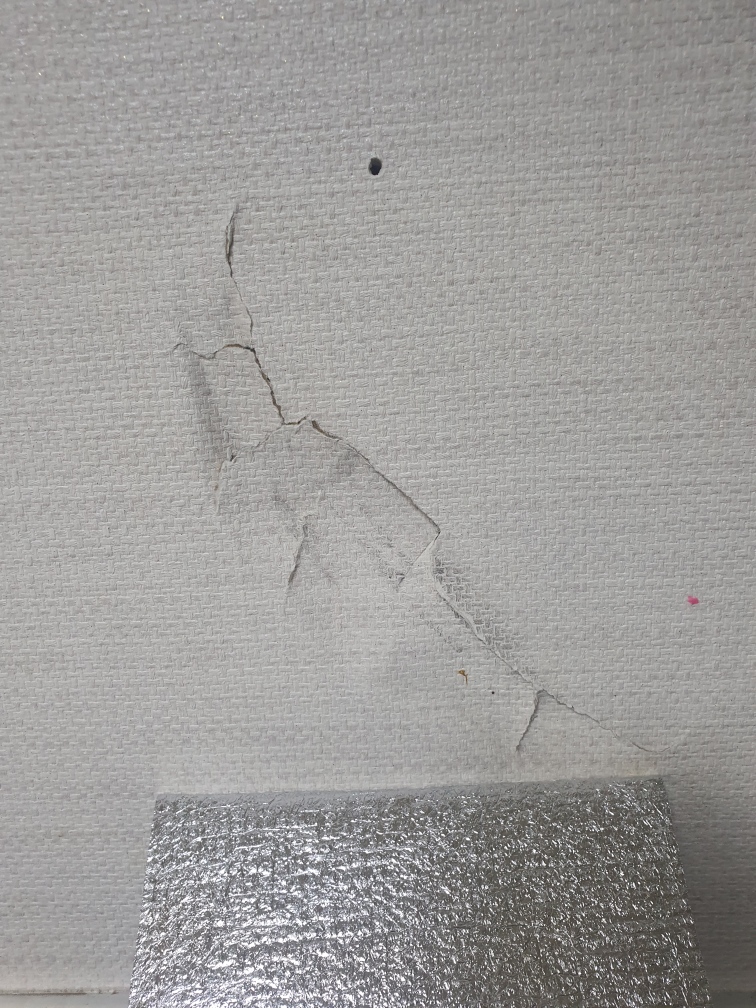
Why some Korean apartment walls feel hollow
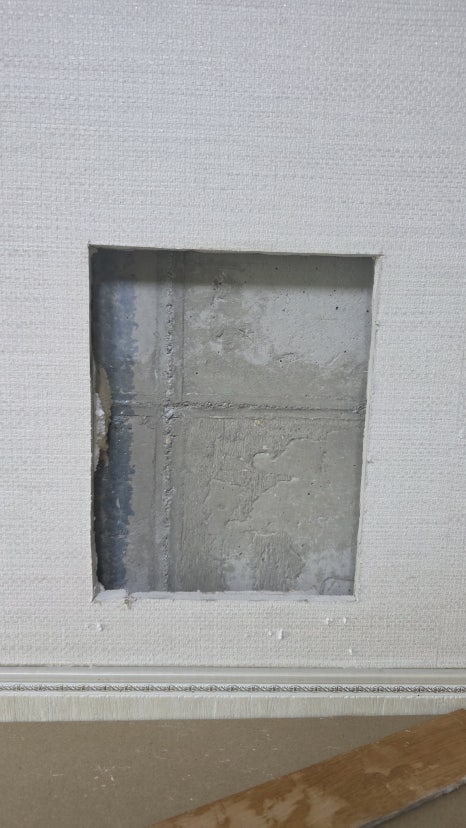
This wall used a method often called tteok-gabae (떡가베) on Korean job sites. Instead of building a timber or metal frame, installers place dabs of adhesive on the concrete wall and press gypsum board directly onto them. The technique creates a flat finished surface quickly, but the spaces between adhesive dabs have no solid backing.
If a hard object strikes one of those unsupported areas, the board may break even though the concrete behind it is undamaged. The same hollow space also makes a repair more complicated: there may be no stud or frame to screw the replacement piece into.
Assessing the damage
In this case, the visible opening was smaller than the network of cracks around it. The damaged area was marked as a roughly 40 × 40 cm square so that every weak edge would be removed. Cutting only around the obvious hole could leave fractured board behind and cause the patch to fail later.
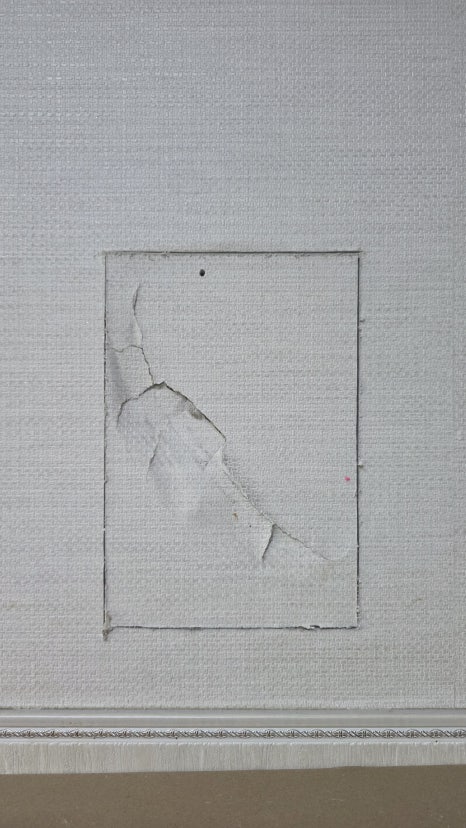
The repair process
- Protect the room. The cutting tool was connected to a dust extractor. Gypsum dust is extremely fine, so dust control matters in an occupied home.
- Remove all cracked material. A multi-tool was used to cut along the marked square and expose the concrete and original adhesive dabs.
- Create backing inside the opening. Strips of gypsum board coated with wood adhesive were inserted behind the existing wall edges and temporarily secured. These strips formed a ledge for the new patch.
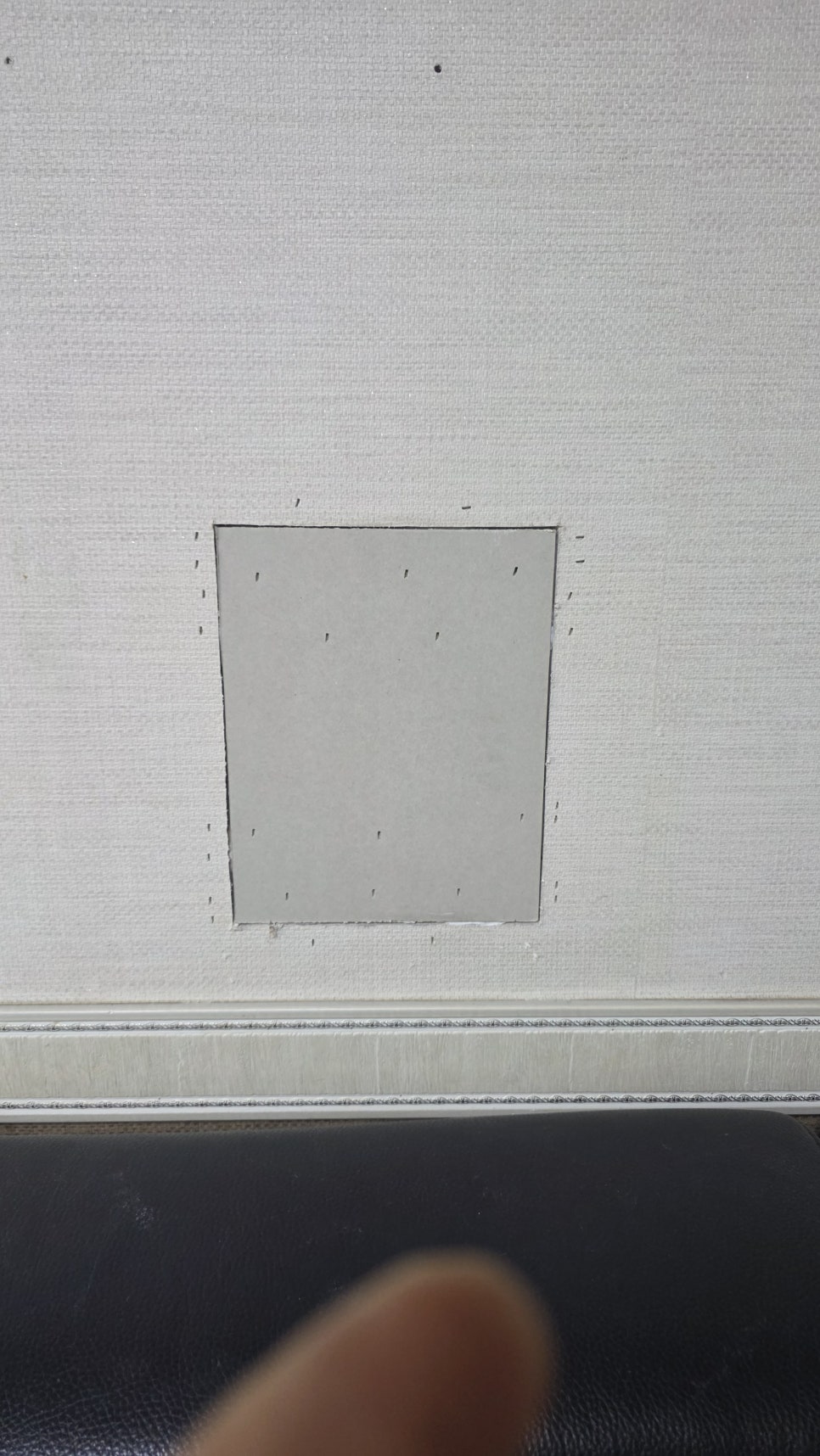
- Fit the replacement board. A 9.5 mm gypsum-board patch was cut to size, bonded to the backing, and held in place while the adhesive cured.
- Finish only as needed. Joint compound, sanding, and wallpaper can follow after curing. At this property, those steps were intentionally left for the planned move-out redecoration.
Why the hidden backing matters
Fasteners alone cannot hold reliably when there is no timber or metal behind the wall. The internal backing spreads the load across the sound part of the existing board and keeps the new piece from being pushed into the cavity. Once the adhesive cures, the original wall, backing strips, and patch act as one assembly.
When to call a professional
- The cracks extend well beyond the visible hole.
- The damaged wall contains an outlet, switch, pipe, or cable.
- You are unsure whether the wall is a partition, a fire-rated assembly, or a concrete structural wall.
- There is moisture, mold, repeated cracking, or movement.
- You need the wallpaper pattern matched seamlessly.
Before authorizing work in a rental, tenants should contact the landlord or property manager and photograph the damage. Keep receipts and before-and-after photos for the move-out inspection.
This article is based on a real repair documented by JH Housing in Korea. Original Korean case study: Naver Blog.