If your apartment entrance door scrapes the floor, makes a dragging noise, or needs an extra push before it locks, the problem may be door sag rather than a faulty lock. This is especially important in Korea because many apartment entrance doors are fire-rated steel doors. Cutting or grinding the door to stop the rubbing can compromise the gap and should not be the first fix.
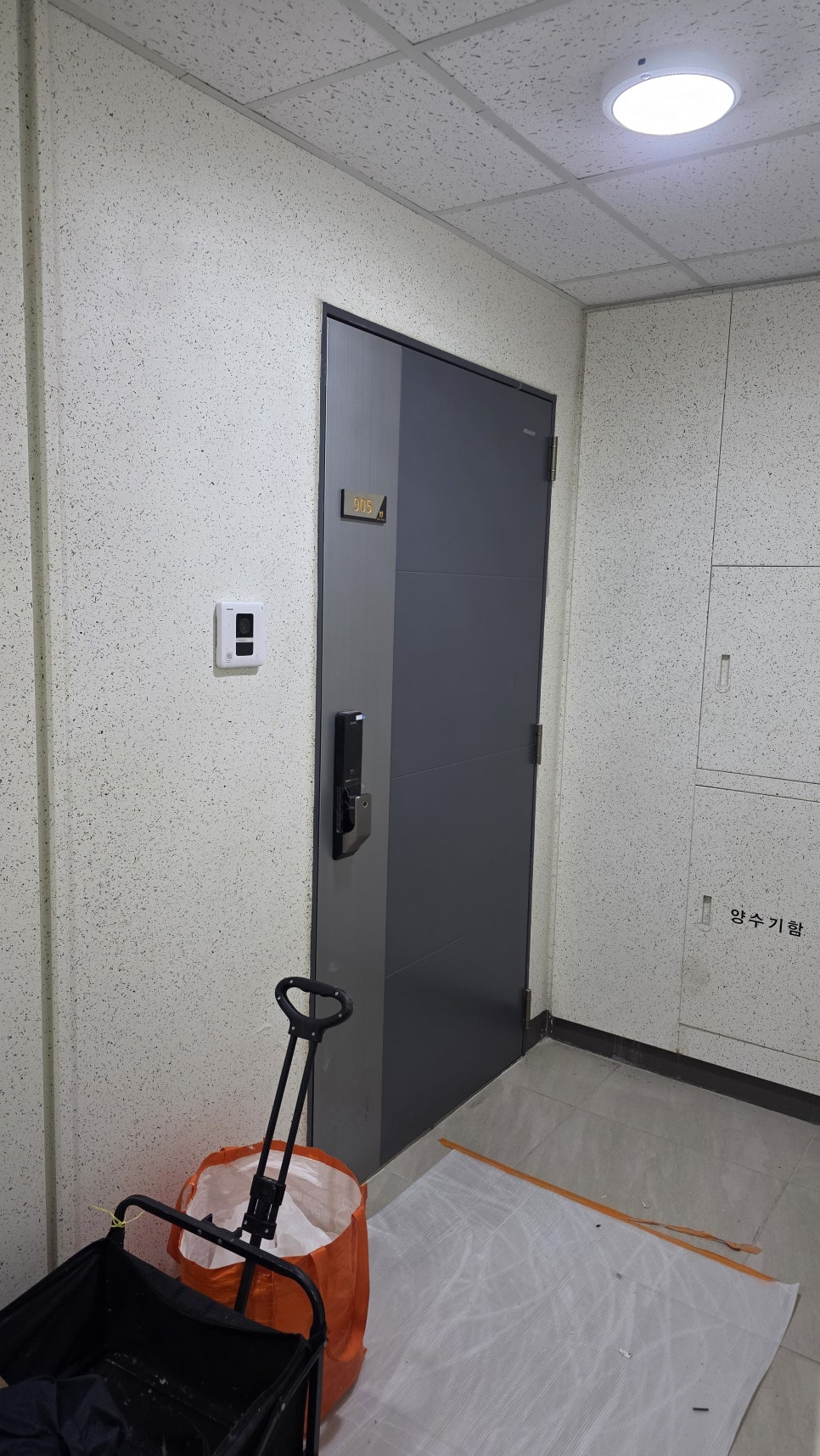
Common signs of a sagging entrance door
- The bottom edge rubs against the floor or frame.
- The latch does not engage unless you push or lift the door.
- The gap is wider at the top on the latch side and very tight at the bottom.
- The door closer struggles to pull the door fully shut.
- New scrape marks appear on the threshold or frame.
Do not assume the digital lock is defective just because the door will not lock smoothly. Misalignment can prevent the latch or deadbolt from entering the strike plate even when the lock itself works normally.
How the cause is diagnosed
A technician first opens and closes the door at several angles, listens for the first point of contact, and compares the gaps at the top, bottom, hinge side, and latch side. Marks on the floor or frame help show the direction of movement.
Loose screws at the upper hinge are a frequent cause. If a screw hole has become stripped, simply tightening the same screw may provide only a temporary improvement. The fixing point needs to be reinforced so that the hinge can hold the door’s weight.
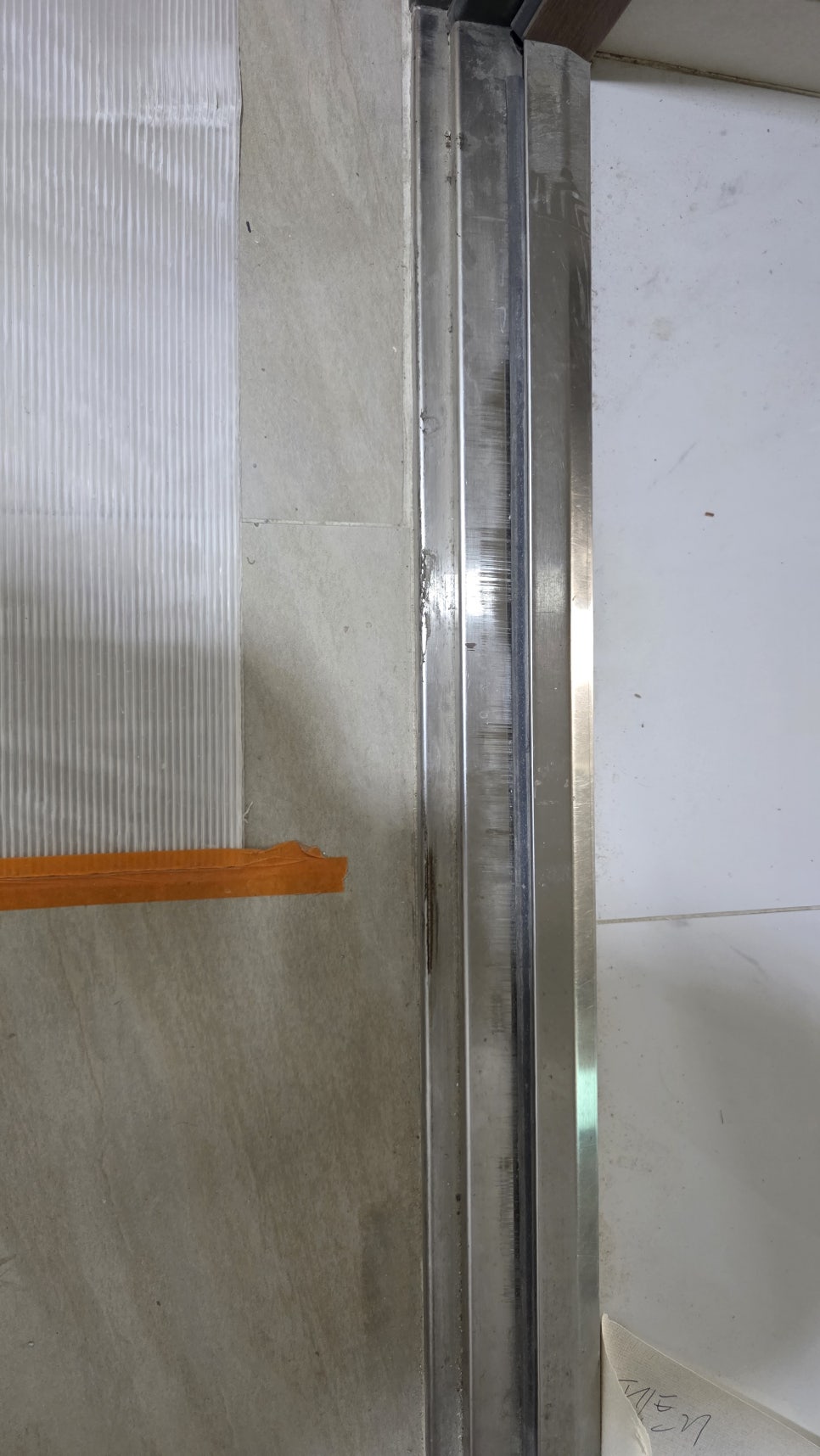
Adjusting a three-way hinge
The door in this case had an adjustable European-style hinge. That allowed the position to be corrected without removing or cutting the door:
- Secure the hinge. Loose or stripped fixing points are repaired first.
- Correct the height. The door is raised enough to clear the lower frame and floor.
- Center the side gap. Lateral adjustment creates an even clearance between the door and frame.
- Set the compression. The final adjustment helps the door meet the seals evenly without excessive force.
- Test repeatedly. The door is opened and closed several times, and the latch, digital lock, seals, and door closer are checked together.
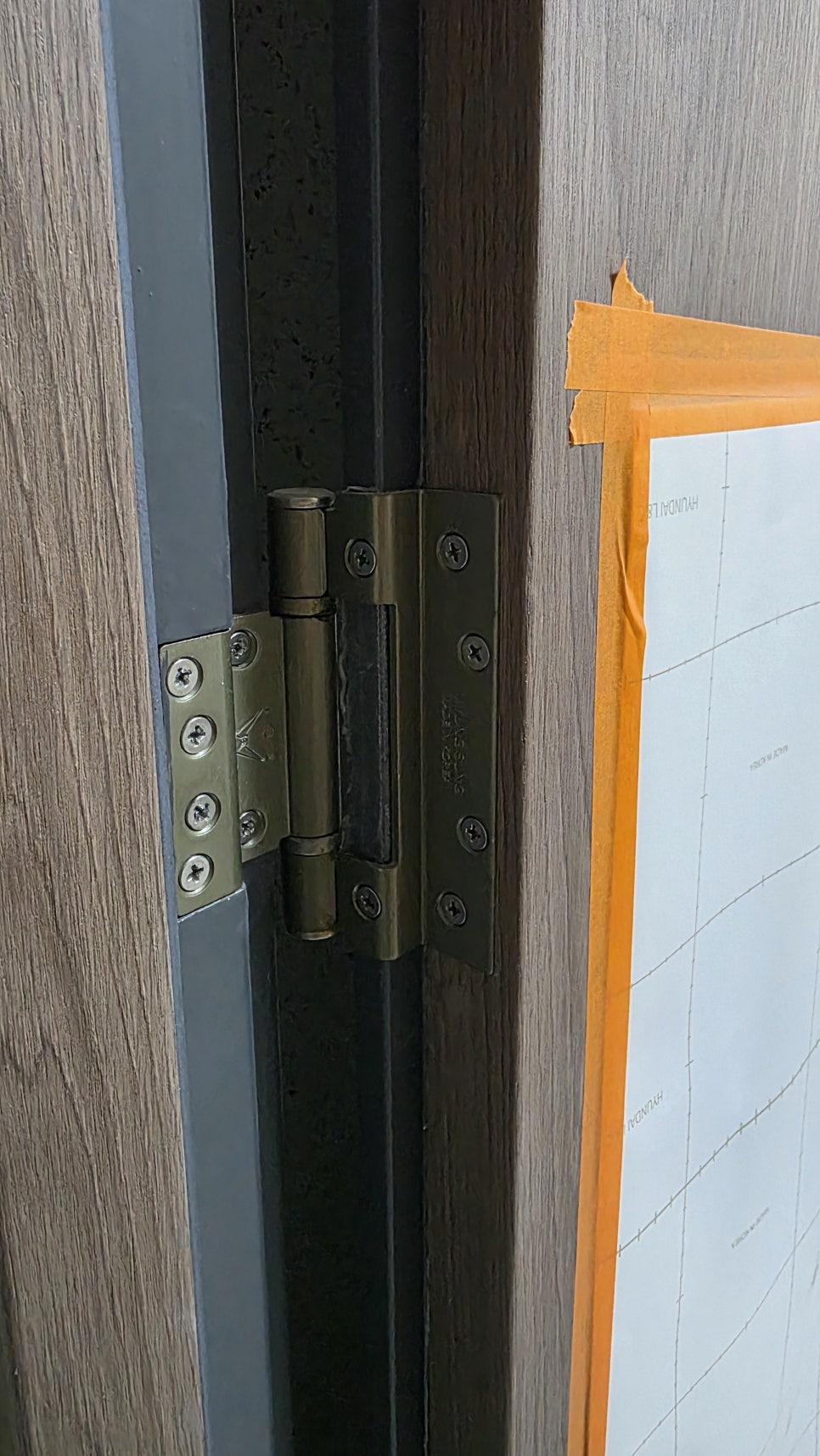
Why grinding a fire door is risky
A fire-rated door is designed and tested as a complete assembly that includes the door leaf, frame, hinges, seals, closer, and specified clearances. Grinding the bottom edge may create an excessive gap and can reduce the assembly’s ability to resist smoke and heat. It can also expose bare metal and cause corrosion.
If a fire door rubs, correct its position and hardware first. Replacement or modification should follow the building manager’s requirements and the door manufacturer’s instructions. Do not wedge a fire door open or disable its closer.
What residents should do
- Photograph the uneven gaps and scrape marks.
- Report the issue to the landlord or building management office if you rent.
- Avoid forcing the digital lock repeatedly.
- Ask whether the door is fire-rated before approving cutting or drilling.
- Use a technician familiar with heavy steel doors and adjustable hinges.
If the door suddenly becomes difficult to open, is visibly bent, has damaged welds, or may block your emergency exit, contact building management promptly. Fire-door repairs affect life safety and should not be treated as a cosmetic DIY project.
This article is based on a real repair documented by JH Housing in Korea. Original Korean case study: Naver Blog.