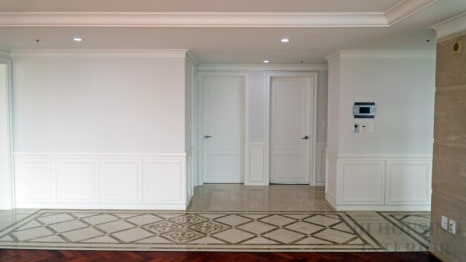
Renovating an older Korean apartment does not always mean stripping it back to concrete. In this 54-pyeong (about 178 m²) home, the layout, herringbone flooring, wainscoting and much of the stonework were still worth keeping. The renovation focused on color, surface repair and a few high-impact upgrades instead of replacing everything.
Start by separating structure from surface
Before demolition, check which parts are structurally sound and visually valuable. Here, the apartment already had a generous layout, real wood flooring, decorative wall panels and marble features. Removing them would have added cost and waste without necessarily improving daily life.
The walls received silk wallpaper, while mouldings, doors, frames and wainscoting were painted. Using the same white family across different materials made the rooms feel larger, but the change in texture kept the result from looking flat.
Restore stone before replacing it
Large marble areas can make a home look dark when the finish becomes dull. Professional polishing brought back the surface sheen and natural veining. The same approach was used on a hallway console top. If the stone is not cracked or badly stained, polishing is often more economical than replacement.
Upgrade the kitchen where it matters
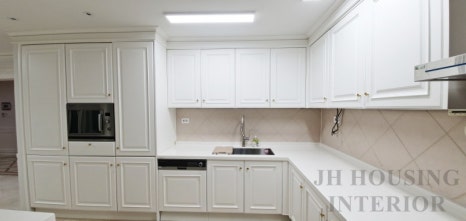
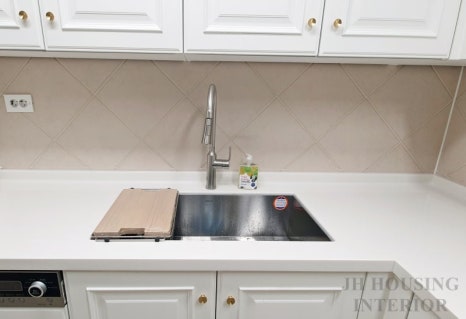
The kitchen layout stayed in place. The cabinet fronts were painted, while the sink and island worktops were replaced with engineered stone. This removed distracting seams and gave the existing cabinetry a more continuous appearance.
A wide rectangular sink and a high-arc faucet improved everyday usability, especially for washing large pans. These targeted upgrades changed how the kitchen functions without the cost of rebuilding every cabinet box.
Other selective repairs used in this project
- Flattening decorative wardrobe doors and applying furniture film instead of replacing the wardrobe
- Installing new LED lighting, switches and outlets
- Retiling only the shower area in the main bathroom
- Replacing the glass shower partition
- Finishing the balcony planter area with tile and elastic coating
- Replacing worn handles and hinges
Plan the work in practical phases
For an occupied home, group dusty demolition, sanding and stone polishing at the beginning, then complete painting, wallpaper and finish carpentry before final fixtures are installed. This sequence reduces damage to new surfaces and makes cleanup easier. Ask the contractor which rooms must be completely empty and whether residents can remain in the apartment during each stage.
Measure large furniture, appliances and moving routes before finalizing cabinetry or island dimensions. In Korean apartment buildings, also confirm elevator protection, construction-hour rules and waste-disposal procedures with the management office. These building requirements can affect both the schedule and the quotation.
Checklist before you approve a renovation quote
- Ask the contractor to mark every item as keep, restore or replace.
- Check whether stone can be polished and cabinetry can be repainted or wrapped.
- Compare the cost of selective work with full demolition, including waste disposal.
- Confirm that old electrical fittings, hinges and plumbing connections are inspected.
- Photograph concealed conditions before they are covered again.
- Keep a contingency budget for hidden damage in older apartments.
Before work starts, record the condition of floors, built-ins and shared corridors. Clear written scope and photos help residents, contractors and building management resolve questions without relying on memory.
The main lesson is simple: decide what deserves to stay before deciding what to tear out. A disciplined reuse plan can protect good original materials, shorten the construction period and put more of the budget into upgrades that residents actually notice.
Adapted from the owner’s original Naver Blog case study: 54-pyeong apartment renovation in Yongin.