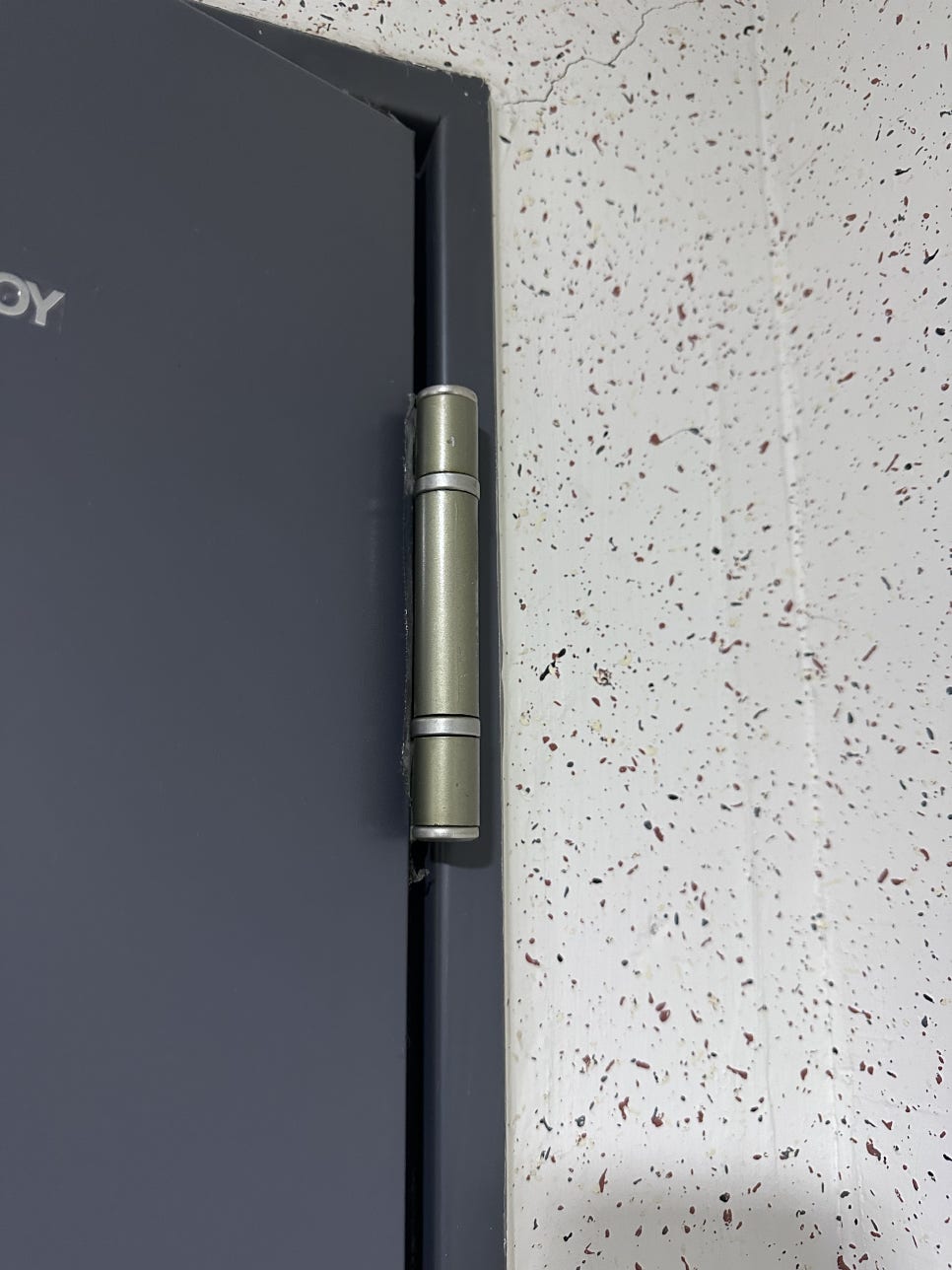
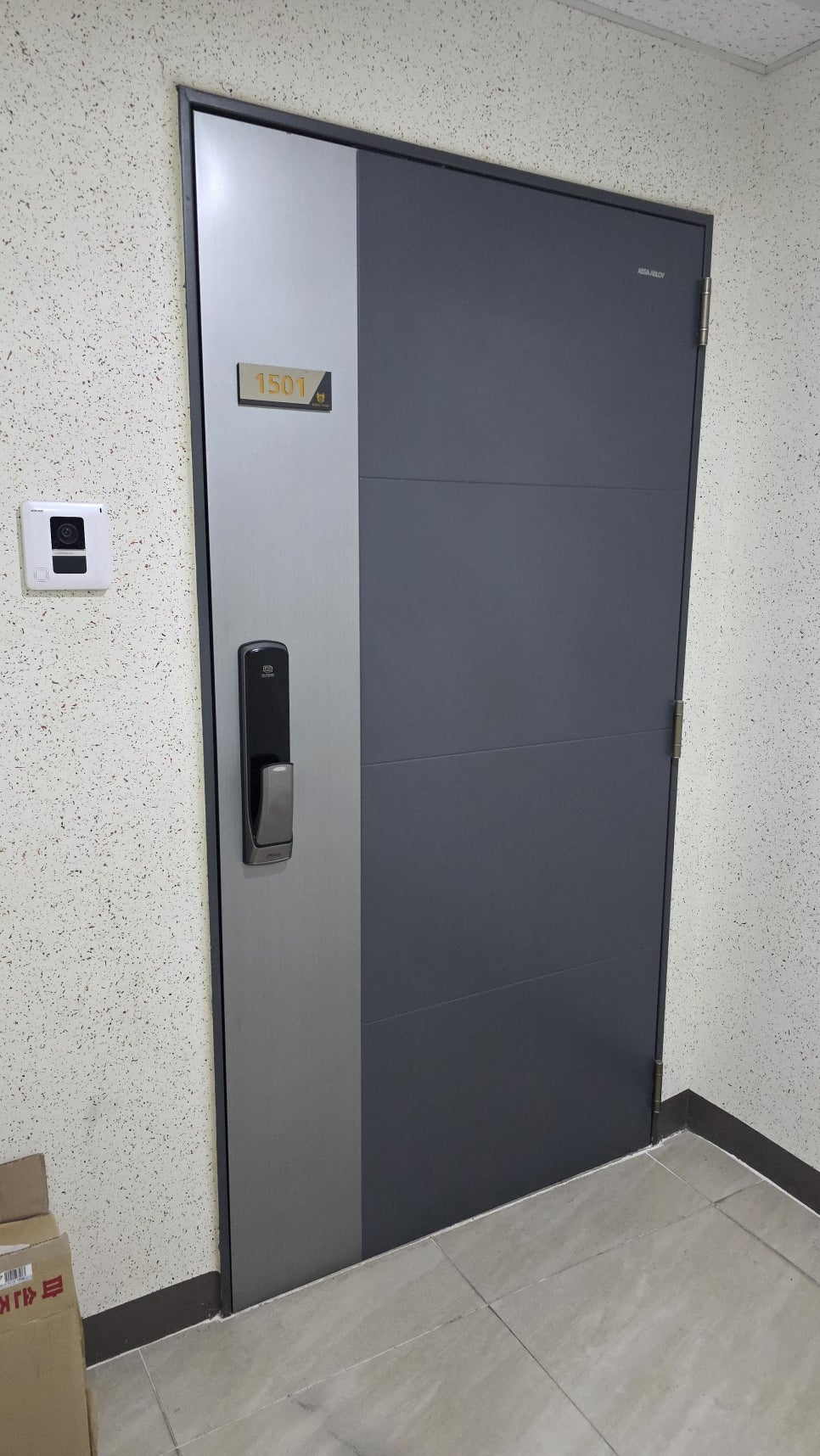
A sagging Korean apartment entrance door often announces itself with a scraping sound. The bottom edge drags across the foyer tile, a fan-shaped scratch appears on the floor, and the door feels heavier or refuses to latch cleanly. In this Dongtan apartment, the cause was not the tile or the door closer. The European-style hinges had gradually moved under the weight of the steel door.
Why apartment entrance doors begin to sag
A Korean apartment entrance door can weigh several dozen kilograms before adding the digital lock and reinforcement hardware. The hinges carry that load every day. Over time, hinge pins wear, fixing screws loosen, or the hinge leaves shift by only a few millimeters. That small movement is enough for the bottom corner to touch the floor.
Before adjusting anything, open the door through several angles and identify exactly where it rubs. Check whether the frame is still square, whether the gap around the door is even, and whether the latch meets the strike plate. A twisted frame, loose hinge and worn door closer require different repairs.
European hinges are different from pivot hinges
Many older apartment fire doors use pivot hinges at the top and bottom. This entrance used European-style hinges fixed to both the frame and the door leaf with screws. Their appearance, adjustment points and replacement dimensions are different. Even a small difference in screw spacing can make a replacement hinge incompatible.
Record the hinge markings and measurements before ordering parts. A technician may bring matching replacements but find that careful adjustment is enough, which saves both material cost and an additional visit.
A practical five-step repair process
- Protect the floor and support the door. A heavy door should not hang freely while hinge screws are loosened.
- Confirm the frame is stable. Measure the vertical and horizontal gaps before blaming the hinge.
- Adjust the hinges in sequence. Small changes at the upper and lower hinges move the door more predictably than a large change at one point.
- Restore the correct clearance. The bottom edge should clear the tile without leaving an excessive fire or smoke gap.
- Test the complete closing cycle. Check smooth movement, latch engagement, digital-lock alignment and the action of the door closer.
Do not grind the bottom of a fire door
Grinding the lower edge may stop the immediate scraping, but it leaves the real cause untouched. If the hinge continues to drop, the door will scrape again. More importantly, apartment entrance doors are commonly fire-rated assemblies. Cutting the leaf or creating an excessive perimeter gap may reduce its ability to limit heat and smoke.
Correct the hinge or frame problem first. If a certified fire door or frame is damaged, ask a qualified door specialist whether repair or replacement is appropriate.
When to arrange professional repair
- The door suddenly became difficult to open or close.
- The latch no longer aligns with the strike plate.
- Floor scratches are becoming deeper or longer.
- Hinge screws spin without tightening.
- The door feels unstable when partially open.
- You cannot safely support the weight of the door.
Take clear photos of the full door, each hinge and the damaged floor before requesting a quotation. Include the apartment name, door dimensions and any markings on the hinge. This information helps the contractor bring the correct tools and possible replacement parts.
After the repair, keep a small, even gap around the door and listen for new scraping sounds. Early adjustment is usually simpler than waiting until the lock, closer or tile is also damaged.
Adapted from the owner’s original Naver Blog case study: European-hinge entrance door adjustment in Dongtan.